Barbora Černušáková
Race & Class,
Volume 62, Issue 1
https://doi.org/10.1177/0306396820926916
Abstract
This article analyses the lived experience of a Czech Roma community in Údol, Ostrava. Based on the author’s participant-observation research, it demonstrates how certain neighbourhoods are increasingly targeted by policy measures which range from the denial of benefits to residents of certain areas to large-scale evictions or plans to demolish public housing. Such approaches are becoming a Europe-wide phenomenon. Although proponents of these measures argue the need to ‘protect law and order’, their policies target communities that are racialised as immigrant, Roma or Muslim. In some ways, the social exclusion of the Roma mirrors that of Black people in US ghettos, but there are also significant differences. The author demonstrates how the ‘post-socialist’ reality of Údol has been defined by the outsourcing of the state’s social functions, such as housing, to be carried out by charities and business. This has contributed, in what has now been turned into a racially defined space, to the ongoing reproduction of Údol’s containment of its Roma population, who, nonetheless, in their everyday life strategies have developed reliance on local and community networks that have replaced the state.
In the past few years, there has been increased targeting of the residents of stigmatised neighbourhoods by the authorities in several European countries. Denmark, Italy, the Czech Republic are among those that have adopted policy measures ranging from the denial of benefits to residents of certain areas to large-scale evictions or plans to demolish public housing. Although proponents of these measures argue the need to ‘protect law and order’, their policies target communities that are racialised as immigrant, Roma or Muslim and plainly breach equality legislation. An example that made the news headlines earlier this year was a Danish government plan entitled ‘One Denmark without parallel societies: no ghettos in 2030’, aiming to demolish public housing in ‘immigrant neighbourhoods’. Another tactic is to deny the residents of stigmatised neighbourhoods access to welfare benefits. In 2019, several dozen municipalities in the Czech Republic, including those with significant Roma populations such as Ústí nad Labem, Most, Karviná or Ostrava-South, declared ‘zones’ in which residents would not be eligible for housing allowances. These measures drew on legislation permitting the denial of some benefits in areas characterised by ‘socially undesirable phenomena’, a term used as a proxy for Roma neighbourhoods. Although a group of Czech Senators filed a request for a judicial review at the Constitutional Court in 2017, at the time of writing (March 2020), no decision has been made.
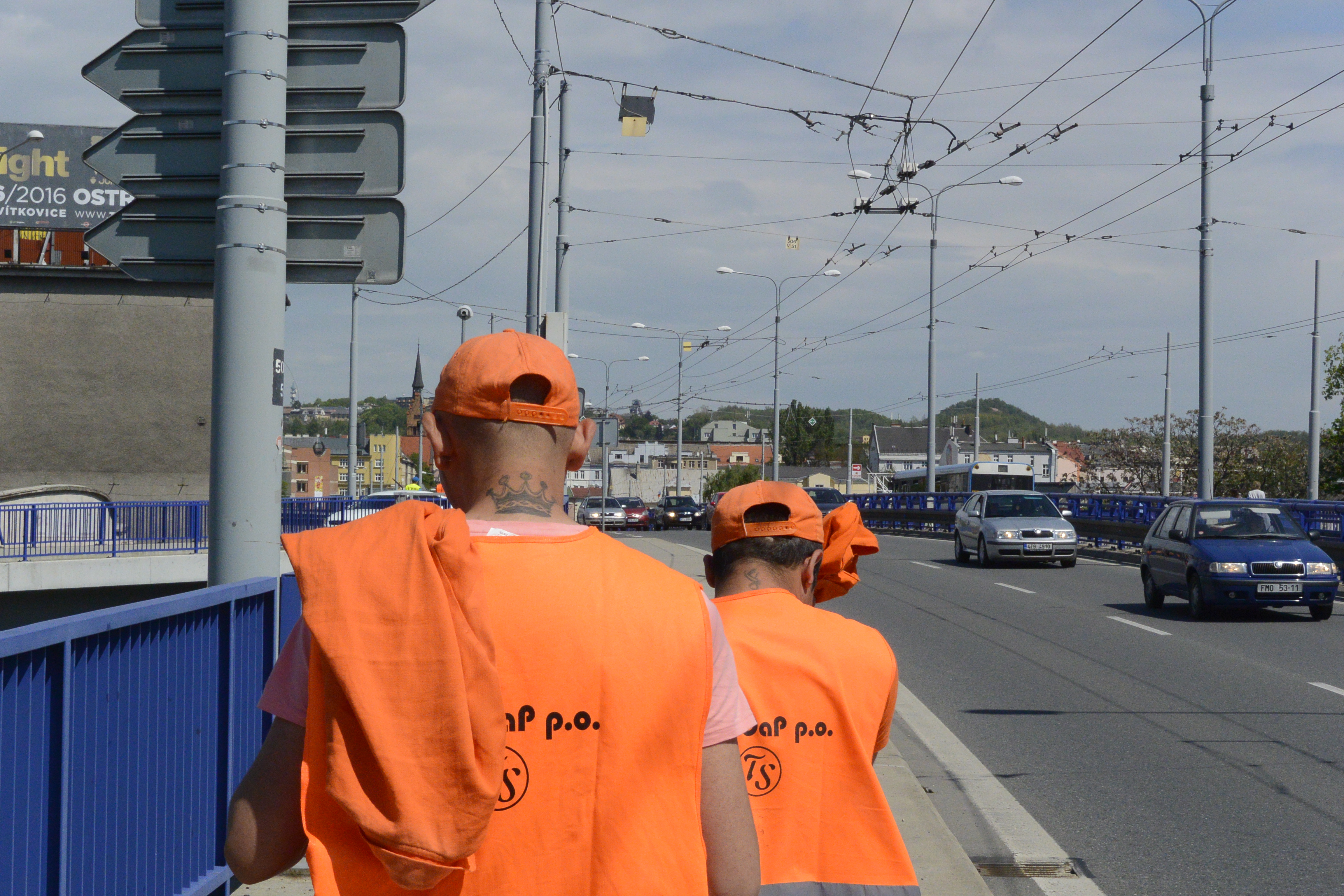
In this article, I present an analysis of the everyday lives of residents of one such racialised neighbourhood in the city of Ostrava, Czech Republic. I am drawing on my eleven-month long ethnographic research, during which I lived in the neighbourhood of Údol and carried out participant observation of experiences of Roma at work, housing, schools and other areas. I complemented the participant observation with formal and informal interviews with my informants who included my Roma colleagues and neighbours but also the employers, job agencies, charity workers and others. During the first three months of my fieldwork, I worked as a street cleaner in a municipal company, where the majority of my colleagues were Roma. Later on, I took short-term work at a recycling line, where there was a mix of Roma and non-Roma workers. Working as a street cleaner, I became acquainted not only with my colleagues but also a group of Roma construction workers who were doing maintenance on one of the main streets that were in my cleaning area. After my contract in the street-cleaning company (Clean) came to an end, I continued to visit my colleagues and the construction workers at their respective work-sites and homes for several months. I also gave English language tutorials to children in three Roma families in Údol. Through my participation and immersion in the world of work of low-income Roma, I established contacts and relationships with several families and social networks. During these encounters, I followed their daily practices and the rhythm of their everyday lives, and discussed the issues they were dealing with. Although my research focused on Údol, many of my informants – both Roma and non-Roma – were residents of other parts of the city. These conversations helped to build an understanding of the stigma associated with Údol.
This article focuses on the spatial aspects of their experience with racialisation and separation from the rest of the city. I aim to contribute to the ongoing debate about the stigma of racialised, declining working-class neighbourhoods in East-Central Europe and their structural differences from other areas of urban relegation, as documented comparatively by sociologists studying urban marginality and stigmatisation.1 To protect the privacy of my informants as well as other actors involved in my research, all the given names of persons, companies and locations are changed in this text.
Urban marginality in the Czech Republic evolved in the post-socialist context, in which the state was transformed from an actor ensuring the provision of robust welfare and its redistribution to a mechanism ‘facilitating survival and speculative multiplication of capital’.2 While unemployment was one of the factors contributing to the emergence of decaying low-income neighbourhoods, the role of the state is what distinguishes Czech forms of urban marginality from other areas similarly affected, documented by sociologists in the US or Europe. In order to facilitate the reproduction of a low-earning proletariat, the state retained its residual welfare function, albeit carried out through intrusive measures (e.g. benefits being made conditional to repeated home visits). The Roma residents of Údol are not experiencing mass unemployment and are not superfluous to the needs of capital; they are integrated into the local labour market and represent cheap labour in construction, recycling or cleaning services, amongst other things. However, they do find themselves confined within low-paid and informal jobs and wage labour itself becomes a ‘vector of life insecurity’.3 The state’s role is to facilitate a supply of cheap labour and it does so by an amalgam of punitive and welfare measures. I observed the operation of these measures through my daily encounters with families in Údol, between February and December 2016.
The principal characters on which this article focuses are Nina and Ivan, a Roma couple in their late forties, who I got to know through my work as a street cleaner. During my visits to their flat, I met some of their other relatives and acquaintances. Another group of my close informants was the extended family of Lucie, a long-term Údol resident in her late fifties. I visited the family, including other relatives living in the area, several times a week; I also occasionally accompanied them to the local authorities; discussed issues such as the costs of living in Údol with them, work opportunities, inter-community relationships, and access to schools and health services. There were numerous other residents that I talked to in depth during my time in Ostrava and whose experiences I have attempted to capture here.
Racism and the containment of Roma within Údol
Although it has a semi-industrial air, Údol is green and leafy in the warmer months, and the housing stock consists of a mix of older brick tenements from the beginning of the twentieth century and some newer concrete blocks. The older houses belonged to the Czech Railways and suffered for years from a lack of investment in repairs. In the 1990s, several of the older residents moved to modern new-builds in other parts of Ostrava and the railways started offering the apartments on a low rent to Roma families.4 The houses in the area were affected by severe floods in 1997, which further worsened their condition. Some of them were still undergoing refurbishment in 2016.
The geographical district of Údol involves a larger area that runs from Ostrava’s city centre to a periphery separated from its remotest part by the railway line. My research focused on this part, known in Czech as Zadní Údol (Rear Údol), which includes a network of streets including Pěkná, which dominates the neighbourhood. According to population estimates for the city of Ostrava, the residents of Rear Údol numbered 900, while 2,157 persons had permanent residence in the entire district of Údol.5 Overall, a strong social stigma was attached to the district, but it was mainly the remote, rear part that was seen as ‘the Roma neighbourhood’. Despite its proximity to the city centre, not more than a fifteen-minute tram ride away, there was a sense of industrial purpose emphasised by the railway tracks, warehouses, industrial chimneys, empty buildings and unmaintained green areas with well-trodden shortcuts.
For decades, a critical formative element of Údol’s social geography has been racism; the neighbourhood is deeply embedded in the black-and-white landscape of Ostrava associated with the physical and social separation of its racialised populations. Within the first decade after the fall of ‘communism’, Roma found themselves more and more confined within certain areas in which they could live, attend school and work. The separation of Roma and non-Roma in Ostrava is immediately obvious in the housing stock, with racially segregated neighbourhoods such as Údol referred to in policy documents as ‘socially excluded locations’ (sociálně vyloučené lokality).6 Even a short visit to these locations reveals the presence of Roma-only schools;7 run-down housing and the absence of facilities for children and young adults and services. However, race has not always been the main organising principle in the city. When they talked about the past, my Roma informants would link their former experiences of interracial contact as arising from mixed workplaces, something that has been lost in the course of the massive lay-offs in the 1990s. In addition, Roma have started being banned from certain establishments, which came up frequently during my conversations. I learned about a pub called Canteen (Kantýna), which used to exist in Rear Údol. ‘Back then, the Roma were barred from there but we would let Lucie and her family in. They were . . . different [from other Roma]’, Simona a non-Roma woman told me, while Lucie was sitting next to her smiling, flattered.
Roma have also been designated as ‘unwanted tenants’, which, together with municipal policies concentrating them in specified areas, further cemented their residential segregation. In 2016, low-income Roma in Ostrava were effectively confined to decaying neighbourhoods. The chances for Roma residents of Údol to move out once their socioeconomic situation improved were severely limited by the prevailing racism of the property market. My informants shared with me several stories of how families had attempted to move out from Údol to less segregated areas. What ensued in these cases was a variation of the same scenario. The non-Roma residents would object, sometimes immediately during the visit, sometimes afterwards, petitioning the council against renting a flat to Roma residents.
Marta worked as a cleaner responsible for the offices at Clean; a long-time Údol resident, she is married to one of my street-cleaning colleagues. ‘We went to see a flat on Old Street. The moment we entered the hallway, the neighbours were outside. One of them told us that rents were high in the building . . . By the time we [finished the viewing and] got downstairs, they were all there. Mr . . .sky from the city council who went to the viewing with us, then returned to the house and discussed something with the residents for ten minutes.’ Marta told me about one of her attempts to move from the Pěkná area. She concluded that the best way to find a new place is to look for a location where ‘they have an experience with Roma. If there is none, it’s a dead end . . . you submit an application, they refuse it and refer you to Sandy Street [a remote part of Údol]. It is better to say that you are a Roma.’
A Roma-rights activist, Karel, living in Rear Údol, has been trying to move out for several years, unsuccessfully. On one occasion, he posted on Facebook a text message his wife had received from a private landlord prior to a scheduled viewing. The landlord had bluntly informed her that he was not willing to rent his flat to Roma as he had negative experiences of them. ‘If you are Roma, your visit tomorrow will be completely pointless.’
The only person I knew who managed to move out from Pěkná street was Mirek, another colleague at Clean. Wolfy street, where he moved to, was part of his cleaning area. One day, as he was sweeping the pavements there, he learned that one of the council flats was available. When he went to the viewing, one of the residents recognised him, and Mirek speculated that this might have helped – there was no petition against him and his family moving in. The application process for council flats works like an auction. Prospective tenants have to offer a certain amount (above the set minimum) that they would be able to pay as rent. Mirek offered double what the municipality was asking for and was granted the tenancy. On the day he moved in, he encountered one of the neighbours, a university lecturer. ‘She asked me how many children I’ve got. I said twelve, and all of them musicians. Then I listed all the instruments they play and said that they usually finish practising between 1 and 4am.’ The neighbour, Mirek recalled, said: ‘Ah, that is going to be interesting!’ Mirek then explained that he was joking and had only two daughters as his sons have already grown up.
Through my long-standing involvement in the area, I came to learn that the social construction of a ‘Roma neighbourhood’ in Ostrava had several components. These included its perceived lack of safety; that its social life took particular forms, such as spending time in groups outside the flats; its low quality of housing, and the lack of access to services and shops. When it came to perceptions of safety, I occasionally received warnings and advice to be vigilant. In general, ‘Roma neighbourhoods’ were not deemed desirable housing options for white people. Vital, an entrepreneur from south-eastern Europe warned me during my early days: ‘This is not England!’ (Tohle není Anglie). And a director of the publicly owned company, Clean, called Pěkná street ‘a complete blackness’ (úplná černota) during my job interview.
Sense of abandonment
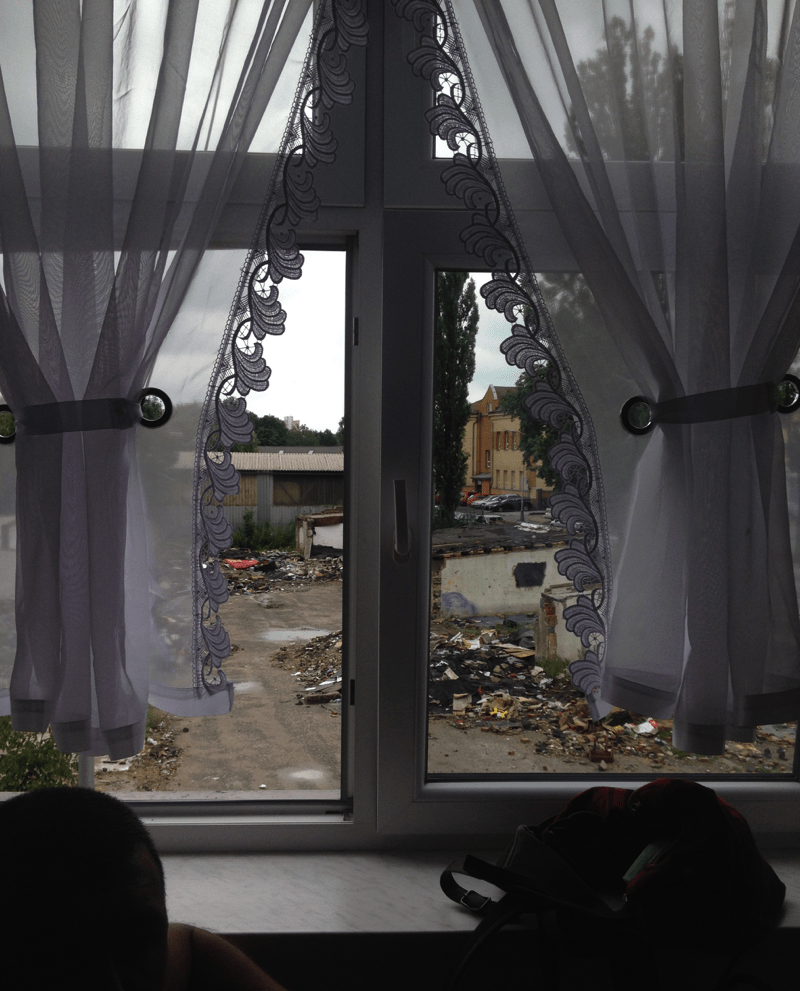
On the way to the city one morning, I noticed that people took their walk from the tram stop to Pěkná through a shortcut between houses. I followed them on my way back home. Behind a warehouse turned into a gym was a big derelict space, which looked like old garages. A man in his late forties exited a three-storey tenement overlooking the rubble and whistled at me. Later I became a frequent visitor to the house because, as it turned out, Nina and Ivan rented a flat on the second floor. The view from their kitchen window, the space with bricks and pieces of mortar from the derelict garages, remained largely unchanged during the entire duration of my fieldwork. One day in July, I asked them if it was OK to take a photo of it. ‘Just go ahead and photograph it . . . how messy it is. They destroy it and then say it was the Gypsies who demolished it’, Nina exclaimed. The family wanted to move to another house almost the whole time I knew them.8 In the summer especially, they complained about the intense smell from the sewage in the basement.
Life in Údol was characterised by a sense of abandonment: by the state not investing in the public housing stock and infrastructure, especially the sewage system; and by capital – available services were limited to three corner shops, two petrol stations and a bar that closed down in summer 2016. Between April and September, an occasional smell of sewage filled the air.
Even in an urban setting such as Ostrava with its already fragmented urban structure,9 Údol appeared to be marginal territory. Several of my informants spoke about the changes in the neighbourhood and its population decline. A lot of houses on Pěkná were empty and there was a rumour among the residents about local authority plans to convert the housing stock into warehouses and offices. While population decline has been an overall trend in Ostrava,10 Údol was shrinking more significantly and its population dropped between 2006 and 2016 by 13 per cent.11 Rumpel, et al. describe this ‘shrinkage’ as a process characterised by population losses and the deterioration of the building stock.12 Communal facilities and spaces for socialising have been slowly disappearing from the neighbourhood. The park in the middle of Pěkná street, once a centre of community life where people would sit in groups, chatting and watching children playing, was often deserted during the spring and summer of 2016. Residents’ strategies to cope with this decline involved mutual self-help and improvised pastimes and activities. Ivan and his friends occasionally held football-tennis sessions there, fitting a net between two dustbins in an improvised playground. During the week, younger children would go to dance classes in an NGO that had an office on Pěkná. However, there were no facilities for older teenagers and young adults. The only exception was a small makeshift gym that Lucie’s nephew had started in the basement of the tenement house where he lived with his parents. He would use it with his friends and cousins in the afternoons.
In the discussion on formations of advanced marginality, Wacquant and others draw structural distinctions between urban dispossession in Europe and in North America. Whereas the ‘banlieue’ of the former is a result of the decline of working-class neighbourhoods, the ‘ghettos’ of the latter are defined by an ‘all-encompassing spatial confinement’, which produces parallel institutions. Crucially, while the relegation of western European neighbourhoods is based on class, in the US the key factor is race.13 Although the experiences of Roma with urban marginality in East-Central Europe do not fit squarely to either of the two categories discussed by Wacquant (‘ghetto’ and ‘banlieue’), they share an important feature with the Black American neighbourhoods: the racial confinement. A high degree of racial homogeneity and impermeable boundaries are further exacerbated by the operation of state and capital.14
The racialised housing market
All my informants from Údol rented their homes; some were the tenants of council flats, many more rented privately. The council’s policy of selling its flats to private owners, and subletting part of its housing stock to charities has significantly reduced the available housing stock. The council flat contracts were renewed annually or every six months. Mila, my 55-year-old colleague at Clean, has lived in Pěkná Street for a number of years. She moved there from the city centre where her family lost their tenancy after the house-owner transferred the title to her son, who didn’t renew their lease. After that, Mila and her husband moved to a one-bedroom council flat which costs about 7,000 CZK (237 GBP) per month, including bills. Since they both work, their household income is above the set minimum and they are not eligible for housing allowances. They have to apply for renewal of the lease every six months.
One significant factor that has contributed to Údol as a ‘race-making situation’15 has been the practice of large real-estate agents, the smaller private entrepreneurs who own some housing units, and the charities which took on the work with the poorest renters that was outsourced to them by the municipality. Both the charities and the private housing entrepreneurs were viewed with a mixture of criticism, on the one hand, for making profit on low-income families, and, on the other, acknowledgement for facilitating access to housing in a context where many landlords openly refused to rent to Roma. At the same time, in their acceptance of the structural framework already laid down within which they operated, both the charities and the entrepreneurs were responsible for reproducing the racialised territorialisation of living space in Ostrava. In some cases, they were doing it very directly.
Peter used to work for a charity assisting Roma and non-Roma low-income clients with housing. While he was happy to have an office job, he began to question the nature of it. One day he explained to me that his role was to mark the files of Roma applicants. When he asked his supervisor for the reasons, he was told that such filtering was supposed to benefit the applicants as its ostensible aim was to prevent situations when (non-Roma) neighbours would complain or petition the city council after a new Roma resident had moved in. Peter’s role was to make a note ‘SE’ (socially excluded) next to the names of those who were likely to be Roma. He was not asked to mark the non-Roma applicants, even if they were from socially disadvantaged backgrounds. An Ostrava-based academic and activist working in the field of social work and housing told me that charities, such as the one where Peter worked, operate as property agents for those on welfare. ‘It is not possible to do both: to control the clients and to provide them with support. The charities choose the control . . . they do it because it corresponds with what the owners [of the housing stock] want.’
Marta has observed that since a charity named Mercy (not the one described by Peter) started subletting some of the council flats within its social housing programme,16 a ‘nadir’ (spodina) has started moving in to Pěkná. ‘[The tenants] are changing all the time.’ Although not all the tenants described by Marta were Roma, they were all poor. The policy of the charity – combining racial and class segregation – was thus contributing to reproduction of a racialised, poor neighbourhood. Frequent changes of low-income tenants in the flats run by the charities were the consequence of extremely short subletting agreements. In the case of Mercy it was only one month, after which the tenants had to request a renewal.
When it comes to the landlord entrepreneurs, both Roma and non-Roma, people in Ostrava and in the media commonly referred to them as poverty businessmen. Monika, Lucie’s daughter, noted that this type of business started to boom after the local authorities dramatically reduced the number of council flats available for rent. Race played the role of social capital for the Roma entrepreneurs. Lucie and Monika shared with me a rather critical account of the activities of Herbert, a Roma man and their distant relative, who owned several flats in Ostrava. According to Monika, he earned money in construction by ‘exploiting Gypsies and homeless people’ whom he paid miserable wages. ‘He does not help even his own family’, concluded Lucie. I have learned about another Roma entrepreneur named Schoman who ‘works with the charities’ and who does not like those who ‘depend on benefits’. After the tragic killing of a Roma man in a restaurant in western Bohemia, Roma leaders in Ostrava (and other locations) organised protests.17 The speakers included only male Roma – politicians and entrepreneurs – including Albert, one of the most notorious owners of residential (multi-occupancy) hotels in Ostrava. As we were listening to his speech with Lucie, her friend, a 60-year-old man (who looked 80), commented: ‘Well he is talking here [about justice] and I live in his residential hotel (ubytovna) and pay 17,000 CZK [575 GBP].’ He explained that five of them live in a one-bedroom flat.18 The only way low-income tenants like him can afford to pay such high rent is through welfare benefits that cover housing-related expenses.
The residential enclosure of low-income Roma in Ostrava was maintained through the mechanisms of the housing market. The above examples point to a systemic racial steering by estate agents, charities and housing providers, a phenomenon similar to that documented in the US.19 The estate agents, aided by charities, channel Roma into depressed neighbourhoods marked by sustained disinvestment, and their operations remain largely unregulated both in terms of the adequacy of the housing they provide and in terms of rents.20 According to estimates by the Czech Agency for Social Inclusion, around 10,000 out of the total 30,000 Roma in Ostrava live in ‘socially excluded’ (and racially segregated) areas and in residential hostels.21 As research in the US has shown, in a situation where poverty is already concentrated in a geographical space, any economic downturn further intensifies the spatial concentration of poverty in a given city.22 The effect is confinement of poverty in black neighbourhoods and the reproduction of racialised inequalities. Massey and Denton carried out simulations in which they modelled four cities with different degrees of racial segregation: 0 per cent, 33 per cent, 66.7 per cent and 100 per cent.23 Starting with the generalised assumption in the US context that the poverty rate of a minority group is twice that of the majority, they looked at how rates of poverty increased as racial segregation intensified, other factors assumed to be constant. When social class, as another factor of segregation is added to the mix together with race, the degree of poverty concentration among blacks doubled from 20 per cent, when no class segregation was assumed, to 40 per cent. The ‘simultaneous occurrence [of racial and class segregation] yields a more marked deterioration in the neighbourhood environment experienced by poor blacks’.24 Although the use of these statistical methods was criticised as over-simplistic and failing to take into account the interaction of poverty and segregation,25 their paper prompts an inquiry on the interaction between race, income and life opportunities within a confined area. In the Czech context, such inquiry is complicated by the absence of statistical data disaggregated by race or ethnicity.26 Drawing on ethnographic data from my research and estimates from the Czech Agency for Social Inclusion27 I attempted to unpack the racialised everyday experiences of my informants and the effects of this segregation on Roma in Údol. Where my analysis, albeit in different context, diverges from those of Massey and Denton is the focus on the causes of racially segregated neighbourhoods. Massey and Denton looked at the impact of racial segregation on black poverty. Their interpretation includes the racial prejudice towards Black Americans of white people who control the government, the financial institutions and the real estate as the key agents of segregation, but it does not extend to the analysis of structures of racial inequality.
Focusing on the structural forces through which the residential segregation of Roma is reproduced, I observed a strong interaction between prejudice and discrimination, and profit-making. The continuing reproduction of ‘Roma neighbourhoods’ in Ostrava is driven by the interest of landlords, property entrepreneurs and the charities that facilitate housing for low-income (Roma) households. Widespread anti-Roma prejudice and racism then becomes monetised and exacerbated by state policies that fail to set racial equality as one of the requirements for social housing.
Community relationships
Despite its decay, Rear Údol was an important reference point for Roma in Ostrava. Many of them lived their entire lives in the neighbourhood; for others it was the first place they lived in when they moved to start a family or for other reasons. The distinctive (albeit visibly disappearing) quality of living in Údol was its openness to communal life and the porous boundaries of individual flats. Relatives and friends would visit each other unannounced, stay for lunches or dinners, drink coffee outside their homes in warmer months, pop to the neighbours when in need of cooking ingredients or food. Where common areas lacked benches, people would bring their own chairs. I would often pop round to Lucie’s house in the summer, chat with the female family members and their neighbours. They encouraged this habit by telling me to simply come by without calling or messaging beforehand. ‘You mean not to do it the gajo (non-Roma) way?’ I asked and they laughed. The issues we discussed during these summer afternoons were their worries about the upcoming school year (the grades, whether or not their children would be put into a Roma-only class); the Romani language (I was trying to learn its basics); the cost of living; family situations and much more.
A category through which I examined some aspects of community relationships in Údol was that of trust. First, trust-related issues (the lack of it, building it, testing it, etc.) marked my everyday interaction as a white (gajo) and white-collar female researcher engaging with Roma blue-collar male and female informants. Initially, there was a lack of trust in me and my motives. Trust played out in a rather more complex and complicated way in my relationship with two of my closest informants. Their family was the first one that I started to visit often, and after several months we grew very close. They would call me ‘a family member’ (cousin), we talked a lot about personal issues and I was free to pop in anytime I felt like it. The flip-side of this relationship was that I was asked lots of questions about who else I spent time with, what sort of things we discussed – while I was asked to refrain from mentioning anything about the family to others. One day I asked about that ‘restriction’ and they explained to me that certain issues, particularly work and work-relations are sensitive due to a lack of solidarity at workplaces. Throughout the fieldwork, I would hear my Roma informants saying that such and such should not be trusted, or that I should be careful who, and who not, to trust. The issue of trust also emerged in the way my informants talked about kinship. Residents of Údol seem to be aware that relatives can only provide temporary respite. In December, I went with a group of housing rights activists to another town, Brno, where residents were resisting forced evictions. A few days later I discussed the issue with Ivan and Nina. I told them people in Brno seemed to be relying on the possibility of moving in with their relatives in case they got evicted. Ivan was sceptical and explained that such an option would only be temporary – one month at maximum. Mirek, one of my better-off informants, stated directly that he would not allow his family members to stay at his place if evicted. ‘They all have several children, it would not be tolerable for us all to squeeze in.’
A particular challenge to the argument of the ‘saliency of kin support among the urban poor’,28 was the sort of situation in which a family member developed a drug addiction. Mila once surprised me with a story about her 19-year-old grandson, Eda who was ‘doing drugs’. Although already a father, Eda acted as a young single man with no ties, according to Mila. He would go out with his pals, come back in a week, and so on. As his behaviour became intolerable, the father of his partner kicked him out from the flat they were sharing. Eda then moved in with his mother, Mila’s daughter, where he continued the same lifestyle: coming and going. He has never worked, was not registered as a job-seeker at the Labour Office and was therefore not receiving any benefits. He has also accumulated debt on health insurance payments.29 I wondered if Mila would offer him a shelter in case he asked for it but she shook her head. ‘Why would I do that? So that he steals my money?’
According to Mila, Eda had started taking drugs at primary school. After his teachers found out about this and reported it to social services, his parents lost custody of their son and Eda was placed in an orphanage. He ran away from there and stayed in various places, including his mother’s house, until he was 18.
These anecdotes correspond with the post-1990s studies of urban poor in the US, which raise the issue of increased distrust between employed and unemployed family members,30 and increased reliance on other forms of support, including ‘disposable ties’ to meet basic needs.31 In several of these studies, race comes up as the ‘life experience that has the biggest impact on trust’.32 In her review of the literature on race and trust, Smith relates the ethno-racial differences over generalised trust (with non-whites in the US manifesting lower degrees of trust than whites in multiple studies)33 to discrimination in employment, housing and the criminal justice system, both historical and contemporary. The other factor that, according to Smith, leads to lower levels of generalised trust is the ‘neighbourhood disorder’ that occurs as a result of concentrations of joblessness and poverty accompanied by ‘social ills and characteristics of disadvantage that not only foreshadow the decline in the community’s social fabric, but also presage a cycle of poverty and social dislocation, a poverty trap’.34
Conclusion
Údol has not always been the dilapidated and racially segregated neighbourhood of today. Those of my informants who remembered the pre-1990s past, would usually draw some conclusions on their lives under ‘communism’. The past was associated with social security, accessibility of stable jobs and legal equality, and to some degree also coercive policies. It was juxtaposed with the present of racial containment, stigma and the decay of their neighbourhood. The everyday life strategies of people in Údol involved reliance on local and community networks that have replaced the state. The ‘post-socialist’ reality of Údol has been defined by the outsourcing of the state’s social functions, such as housing, to be carried out by charities and business. This has led, in what has now been turned into a racially defined space, to the ongoing reproduction of Údol’s containment of its Roma population, with its dilapidation and racial segregation inextricable from the supply of a basic human need – for housing.
***
References
1. Loïc Wacquant, ‘Three pernicious premises in the study of the American ghetto’, International Journal of Urban & Regional Research 21, no. 2 (1997), pp. 341–53; Loïc Wacquant, Urban Outcasts: a comparative sociology of advanced marginality (Cambridge: Polity Press, 2008); Toma Slater and Ntsiki Anderson, ‘The reputational ghetto: territorial stigmatisation in St Paul’s, Bristol’, Transactions of the Institute of British Geographers 37, no. 4 (2012), pp. 530–46.
2. Using examples from Poland, Staniszkis shows how government politicians in 1990–1993 pushed for the public refinancing of ‘bad debts’ by the Central Bank; and creating ‘a framework leading to indebtedness trap of the state-owned enterprises’ (p. 76). She concludes that capital formation in this early stage of post-socialism involved the individual use of government benefits to gain privileged status for one’s enterprise. In other words: the transfer from state-controlled to privately controlled capital was politically facilitated and was not a result of ‘natural’ processes of liberalization. Jadgwiga Staniszkis, Post-Communism: the emerging enigma (Warsaw: Polish Academy of Sciences, 1999).
3. For further details on the containment of Roma in low-paid and racialised jobs, see: Barbora Černušáková, ‘Roma: the invisible worforce of Ostrava’, Race & Class 58, no. 4 (2017), pp. 98–105.
4. Detlef Baum, Kamila Vondroušová and Iva Tichá. Charakteristika sociálně prostorové segregace ve srovnání dvou měst (Halle – Ostrava) (Ostrava: Ostravská Univerzita, Fakutla Sociálních Studií, 2014), p. 60.
5. In Czech: https://www.socialni-zaclenovani.cz/wp-content/uploads/PA_ke_koncepci_bydleni_SMO.pdf.
6. The action plan for social housing in Ostrava 2019–2022 developed for the city of Ostrava by the Agency for Social Inclusion lists twelve ‘socially excluded locations’. See: https://www.socialni-zaclenovani.cz/wp-content/uploads/Ostrava_TAP_Soci%C3%A1ln%C3%AD-bydlen%C3%AD_ZOR7.pdf.
7. I have documented the racial school segregation in 2015 research for Amnesty International (Must Try Harder, [London: Amnesty International, 2015]).
8. They eventually found another place in Údol to which they moved in autumn 2017.
9. Ondřej Slach, Vojtěch Bosák, Luděk Krtička, Alexandr Nováček and Petr Rumpel, ‘Urban shrinkage and sustainability: assessing the nexus between population density, urban structures and urban sustainability’, Sustainability 11, no. 4142 (2019).
10. Between 2005 and 2015, the population decreased by 5 per cent. Strategic Plan for the City of Ostrava 2017–2023, p. 3. http://fajnova.cz/wp-content/uploads/2018/04/SPRM_fajnOVA_indikatory_2018.pdf.
11. Strategic Plan for the City of Ostrava 2017–2023, p. 13.
12. Rumpel Petr, Slach Ondřej, Tichá Iva, Bednář Pavel Urban Shrinkage in Ostrava, Czech Republic, Research report (2010), p. 5
13. Wacquant, ‘Three pernicious premises in the study of the American ghetto’; Loïc Wacquant, ‘A Janus-faced institution of ethnoracial closure: a sociological specification of the ghetto’, in Hans-Christian Petersen, ed., Spaces of the Poor: perspectives of cultural sciences on urban slum areas and their inhabitants (Bielefeld: Transcript Verlag, 2013), pp. 15–46, 32–33.
14. Wacquant, ‘A Janus-faced institution of ethnoracial closure’, p. 33.
15. James D., ‘The racial ghetto as a race-making situation: the effects of residential segregation on racial inequalities and racial identity’, Law & Social Inquiry: Journal of the American Bar Foundation 19, no. 2 (1994).
16. Within the programme ‘Prevention of homelessness’, the charity was renting around 150 flats in Ostrava and subletting them to individuals and families at risk of homelessness.
17.http://www.romea.cz/en/news/czech/hundreds-around-czech-republic-honor-memory-of-dead-romani-man-right-wing-extremists-assemble-at-site-of-his-death-riot.
18. One bedroom in the Czech Republic means there is no living room and the living space consists of a kitchen, bathroom and a bedroom. The reason behind the high rent is that the owners of residential hotels charge per capita, so in this case each of the tenants paid 3,400 CZK.
19. Wacquant cites Foley (1973), Berry (1979) and Tobin (1987) in his Urban Outcasts: a comparative sociology of advanced marginality.
20. The practice of one of the major real-estate agents to concentrate low-income Roma residents in specific locations in Moravia-Silesia region was documented among others in a series of articles by a journalist Saša Uhlová. See (in Czech): http://denikreferendum.cz/clanek/24362-bakalovo-dedictvi-na-ostravsku-ghetta-a-sabotaz-zakona-o-socialnim-bydleni.
21. In Czech, p. 9: https://www.socialni-zaclenovani.cz/wp-content/uploads/MPI_Ostrava.pdf.
22. Massey D., Denton N., American Apartheid: segregation and the making of the underclass (Harvard University Press, 1993), p. 126.
23. Massey and Denton American Apartheid, pp. 120–21.
24. Massey and Denton American Apartheid, p. 125.
25. Jargowsky Paul Poverty and Place: ghettos, barrios, and the American city (New York: Russell Sage, 1997).
26. The authorities tend to excuse the absence of a system of collecting racially disaggregated data on their obligation to ‘protect personal data’ but there are also concerns among the Roma community over the risk of abuse of such data. For details see (in Czech), M. Knob, ‘Sběr etnických dat v českém právním prostředí’, Právník 155, no. 5 (2016), pp. 427–45.
27. Reports on Ostrava (in Czech): https://www.socialni-zaclenovani.cz/lokalita/ostrava/.
28. Desmond presented ethnographic evidence from his research in Milwaukee, which questioned the ‘saliency of kin support’ and proposed that it has been in fact replaced by ‘disposable ties’ among strangers who found themselves in a similar situation. Matthew Desmond, ‘Disposable ties and the urban poor’, American Journal of Sociology 117, no. 5 (2012), pp. 1295–335.
29. Those outside employment who are not registered as unemployed with the Labour Office are obliged to pay their own health insurance.
30. Smith Sandra S., Lone Pursuit: distrust and defensive individualism among the Black poor (New York: Russell Sage Foundation, 2007).
31. Desmond, ‘Disposable ties and the urban poor’.
32. Uslaner Eric M., The Moral Foundations of Trust (Cambridge: Cambridge University Press, 2002), p. 91.
33. From the review of literature, Smith distilled three conceptualisations of trust: generalised, particularised and strategic. Sandra S. Smith, ‘Race and trust’, The Annual Review of Sociology 36 (2010), pp. 453–75.
34. Smith, ‘Race and trust’, p. 459.
35.http://www.romea.cz/en/news/world/slovak-police-officer-said-to-have-beaten-five-romani-children-in-krompachy-settlement-and-threatened-to-shoot-them.





 Ostravart