
Phurikane giľa
We met Vasil at Ostrava’s Absintový klub les where his band, led by the lead violinist Kolman, played tirelessly until the early hours. The wide repertoire covered all the major hits, including Ide poštár ide/ O poštaris avel, traditional Slovak folk songs and a mix of czardases (traditional Hungarian folk dance). During a cigarette break, we congregated with the other smokers in a small room with a strong light and a line of chairs around its walls. Vasil, seated in the corner, sipping beer, surprised me saying that he actually prefers the “new” music to cymbalo music . “But [the cymbalo music] is what I learned and what I do for living.” He plays accordion, violin and sings. So do all his siblings, although not all of them are professional musicians.
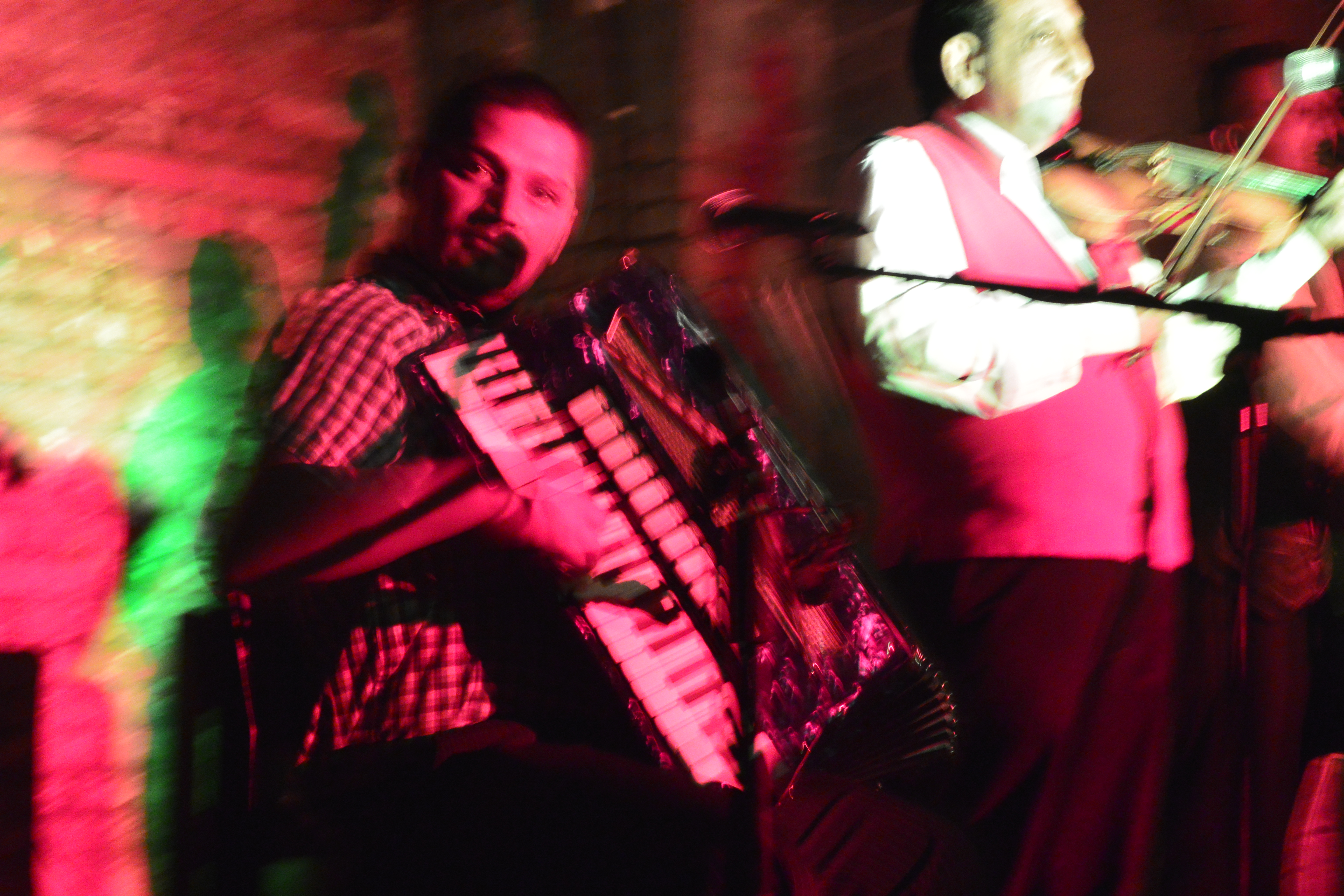
“A child starts absorbing music from an early age… Even if the parents aren’t musicians, they would listen to music from a radio or a player and the child learns the songs that way…”
Vasil’s musical education consisted of listening and practicing: he knows all the songs he performs by heart.

“Everybody is musical, but you [many non-Roma] haven’t awaken your musicality.” Jarek, a friend of mine nodded, and Vasil pointed at him: “For example he used to be a DJ…”
Jarek: “I would take these [old] songs and mix them with dance music…”
Vasil: “And it would work perfectly.”
Neve giľa: Rap from Ostrava

Majk Fejk [Mike Fake] is a rap singer from Ostrava. Inspired by a Slovak rapper Mike Spirt, he wanted to use a name that would refer to his role model, hence: Majk Fejk. Coming from a family of musicians (his father is a drum player) he got interested in music after he had given up sports: boxing and karate.

His songs are about growing up in what he calls a ghetto. “You know: bad people, assaults, fights and violence.”
The way how to survive is to avoid those bad people and take control over your own life.
In most of his songs, Majk sings about the experience of the “street”, the life prospects and everyday woes of young people born in Ostrava’s “Roma neighbourhoods”. This video was shot in various locations in Přívoz and the camera gently captures his relationship with the city.
 Ostravart